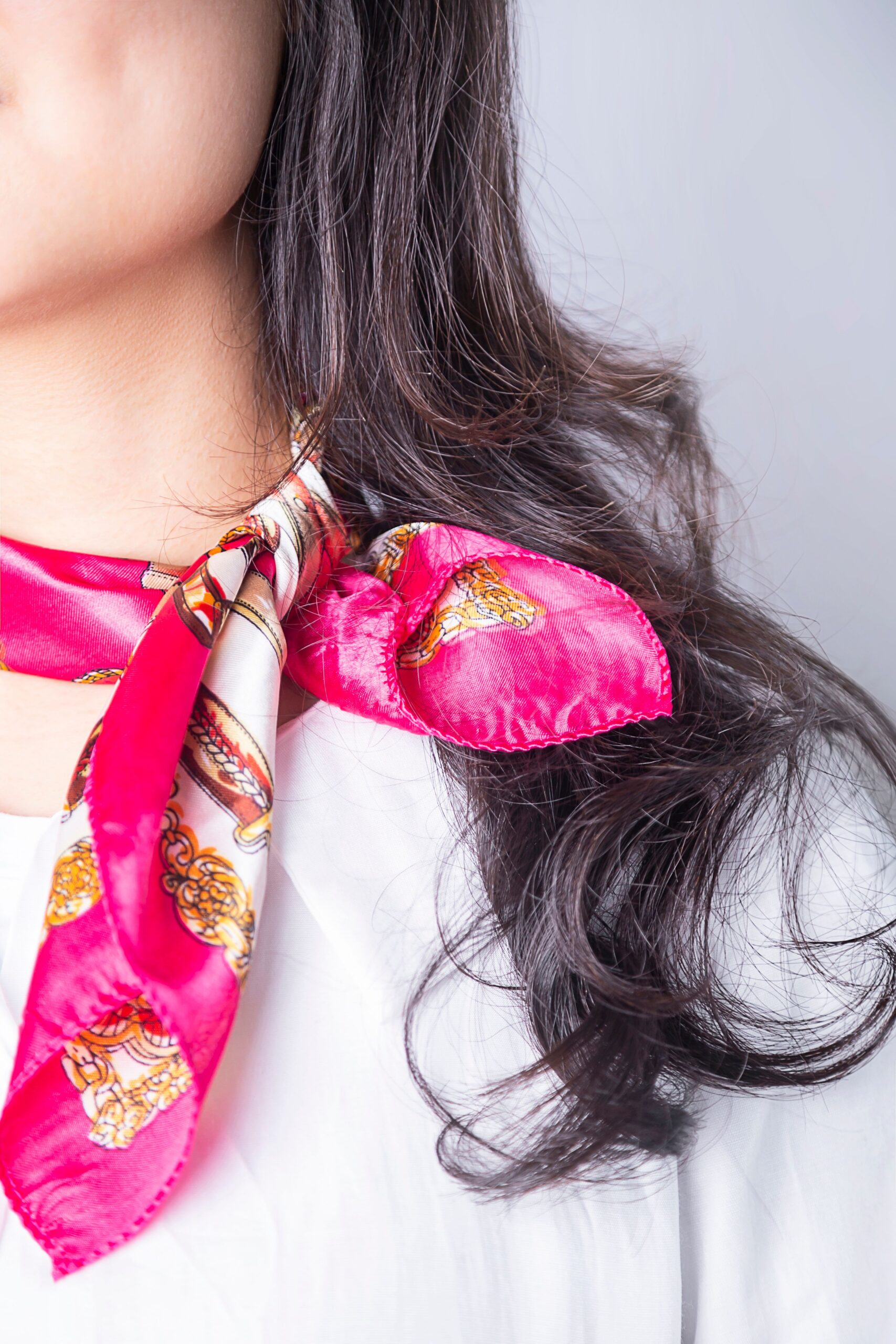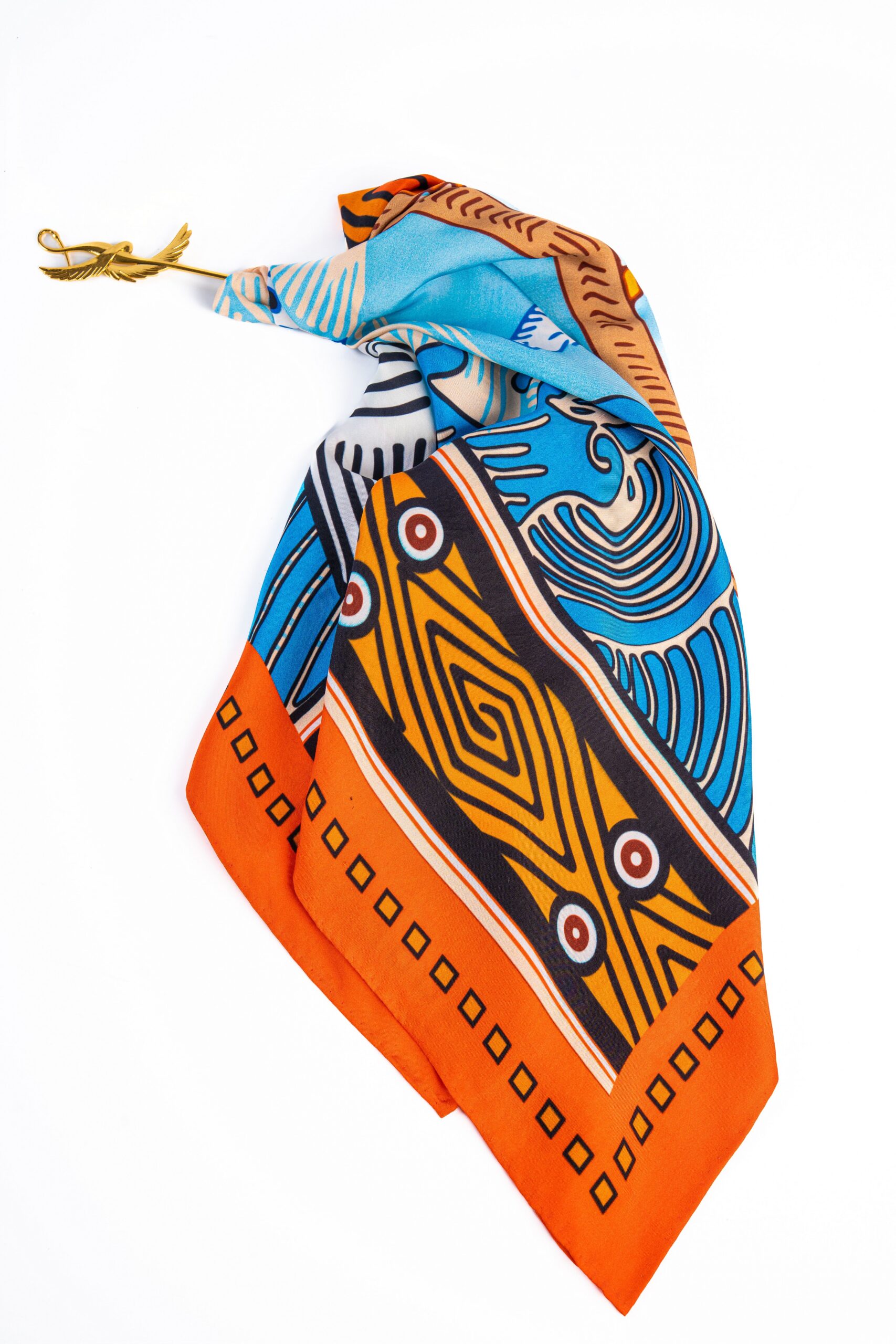

If you ask people to describe a truly elegant woman, they rarely begin with her handbag. They’ll say, “She always looks so put together,” or, “She has incredible style,” or, “There’s just something about her.” But sooner or later someone will mention a scarf — the silk square tied at the neck with that je ne sais quoi, knotted on a handbag to lend a neutral outfit a flash of color, or protecting hair on a windy afternoon in Saint‑Tropez. The right scarf, worn without effort, reads like a signature.
Certain objects become shorthand for particular kinds of women — iconic, quietly powerful, often old‑money — and the silk scarf is one of them. Grace Kelly used hers with practical elegance; Audrey Hepburn, princesses, socialites and glamorous French grandmothers have all seemed born knowing what to do with a square of silk. The rest of us stare at one and wonder if we’ll look impossibly chic or like we’ve wandered into an amateur production of “The Life of a French Person.” Let’s unravel the mystery.
How did a 70, 90 or 140 cm square of silk evolve into an emblem of refinement, a collectible, and a tiny everyday miracle? How did the Hermès carré — the house’s compact canvas — become a cultural icon, a status signal, and an object that households treasure and pass down?
Origins and ritual of the Hermès scarf
Hermès began with leather and horses. In 1837 Thierry Hermès opened a Paris harness workshop and built a reputation for materials and stitching that would not fail at a gallop. That insistence on craft is the house’s genetic code. For its centenary in 1937 Hermès introduced the carré not as a frivolity but as a compact stage for the house’s imagery. The earliest designs read like little narratives: carriages, bridles, regattas and hunting motifs that echoed Hermès’s equestrian roots and the family’s cabinets of curiosities. The scarf carried provenance as loudly as a crest.
Packaging matters, too. The now‑ubiquitous Hermès orange box — a wartime, happy accident — turned unwrapping into ritual. That box performs meaning: it promises provenance, care, and an experience, and becomes part of the object’s value. Ritual — buying, unwrapping, knotting, storing — is as much part of the scarf’s power as its pigment.
How an Hermès carré is made
A true Hermès scarf is an exercise in layered craft: design, color separations, screen printing, hem‑rolling and inspection. Artists submit designs that are converted into dozens of color passes; many scarves use dozens of screens to build nuance. The fabric is usually silk twill, a diagonal‑rib weave that holds a knot and gives colors body. The hem — hand‑rolled and stitched — is a tiny miracle and a forensic signature for collectors. It’s painstaking, artisanal work, and the object’s aura comes from that human attention.
Design language and storytelling
Hermès scarves are narrative objects. Designs favor compositions that work on the bias, so the pattern reads beautifully when folded, framed or knotted. The house often practices what I call asymmetric symmetry — a deliberate imbalance that rewards a second look and makes the scarf reveal new things depending on how you fold it. Some classic designs have achieved archetype status: Robert Dumas’s early tableaus, Hugo Grygkar’s Bride de Gala (1957), and later signatures like Kermit Oliver’s richly textured American tableaux. Limited runs, single‑issue prints and reissues feed collector mania; rarity and micro‑stories — the orange box, Grace Kelly’s sling — fuel desire.
What a scarf (and especially an Hermès scarf) does for you
A scarf signals quietly. It’s conspicuous understatement: a Veblen good that announces membership in a certain taste economy without shouting. It’s also ritual, memory and embodiment. A silk carré worn at the neck holds scent and crease patterns that become mnemonic devices. Families pass scarves on as talismans; the old hem or thumb‑worn edge carries stories.
Choosing your first Hermès carré
Think about use. If you want versatility, a carré 90 is the best compromise: fold it as a bandana, belt, neckerchief or small shawl. A 70 can be too small; a 140 shawl (often a silk‑cashmere blend) offers warmth and drama. Twill is classic; plissé and pleated finishes change texture but limit knotting options. If you’re buying vintage, check the hem, smell for old perfume, and verify provenance. For those on a budget, look to independent ateliers, Liberty prints or smaller Italian houses — you can achieve the aesthetic without the Hermès markup.
How to wear it — and how not to
There are many right ways to wear a scarf and a few theatrical wrong ones. A simple Parisian loop, a bias fold tied under a wool collar, or a bandana fold are elegant and effortless. Beware of turning a carré into costume: halter tops and overdone logo clashes read as trying too hard. Don’t layer logos; let the scarf perform its quiet trick. Use it as a bag tie for discreet color, or as an impromptu pouch or jewelry wrap — practicality is part of the carré’s charm.
Silk scarf gifting and etiquette
Present a scarf in its box. A scarf is intimate; gift it thoughtfully, with a note explaining why you chose the design. In‑store, take your time, examine the hem and ask politely to see the back. If you receive one that doesn’t work, treat it with care if you return it — the object is fragile and the etiquette matters.
Ethics and context of the Hermès scarf
Silk production has environmental impacts and complex sourcing. Designs borrow from global motifs, raising questions about credit, compensation and cultural stewardship. If provenance and sustainability matter to you, seek out small makers who transparently source and compensate artists.
The carré’s paradoxes
The Hermès carré is intimate and public, practical and ceremonial, collectible and eminently wearable. It rewards attention: the patient folder, the person who learns a knot, the family who keeps a story. The best quiet luxury is not loud; it lets secrets stay folded inside the hem.
If you’re choosing your first scarf, think of it as an act of curation: pick a size and palette you’ll wear three different ways, and buy what will anchor your identity, not what will only hang in a closet. If you collect, collect a story as well as a colorway. And if you feel awkward tying one, begin with a Parisian loop and practice — repetition becomes habit, and habit becomes grace.
Have a carré story, a scandal, an heirloom? Send it to madamxofmontecito@gmail.com — perhaps I’ll read it on a future episode. Wear one, tie one, gift one, and try not to gloat. After all, the best secret luxury is the one that sits quietly at your throat.